 English
  简体中文
简体中文 Recently, Visiting Assistant Professor Ye Bin from the School of Environmental Science and Engineering at Southern University of Science and Technology published a research paper titled “Feasibility of coupling PV system with long-distance water transfer: a case study of China’s ‘South-to-North Water Diversion’” in the important journal of resource recycling, Resources, Conservation & Recycling (IF 8.086). The study proposes a new model for developing renewable energy and reducing carbon emissions in inland areas by utilizing limited land resources.
I.Research Background
China’s South-to-North Water Diversion Project, including the Eastern and Middle routes, has effectively alleviated the water shortage in the northern regions. However, it has also occupied tens of square kilometers of valuable land along the routes, and the water transfer process requires the construction of stepped pumping stations, increasing electricity demand along the river. With the decline in solar power generation costs in recent years, this study proposes installing photovoltaic (PV) panels above the water transfer channels to fully utilize the spatial resources above the river for solar power stations.
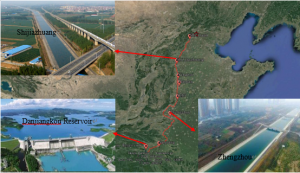
Figure 1: The Middle Route of the South-to-North Water Diversion Project and Major Cities Along the Rout
II.Research Content
The first step of this study was to determine the installation area of solar panels. Based on Google Earth image data, the latitude and longitude of critical points along the Middle Route of the South-to-North Water Diversion Project were identified. Given that the river width ranges from 9 to 40 meters and the green belts on both sides are 100–200 meters wide, the average width for PV module installation on the river was determined. Two scenarios were proposed:
Scenario 1: Solar PV panels cover only the water surface area of the river, with an average installation width of 40 meters. This scenario is shown in Figure2. The impact on the river ecosystem and surrounding environment is limited in this case.
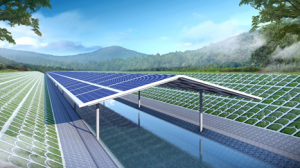
Figure 2: Scenario 1 (Laying Width 40 m)
Scenario 2: According to the construction requirements of the South-to-North Water Diversion Project, green spaces of about 200 meters are set on both sides of the river, with the total river width ranging from 409 to 440 meters. Assuming half of the area is covered by solar panels, Scenario 2 was proposed. The solar panels are supported by pillars 10–20 meters above the water surface, with an assumed average roof width of 200 meters, as shown in Figure 3.
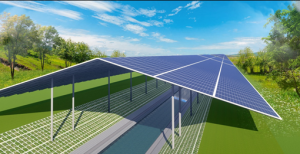
Figure 3 :Scenario 2 (Laying Width 200 m)
III. Research Results
Simulation results indicate that, considering initial investment and operating costs, the power generation costs for the two cities are 0.36 yuan per kilowatt-hour and 0.35 yuan per kilowatt-hour, respectively. In comparison, the benchmark prices for desulfurized coal-fired power plants in the two provinces are 0.3779 yuan per kilowatt-hour and 0.3720 yuan per kilowatt-hour. Thus, the feed-in tariff for solar power is lower than the benchmark price for desulfurized coal power. According to the financial parameters set, the payback period for this project is 19.8 years without considering government subsidies for new energy. If the renewable energy subsidy for PV is taken into account, the payback period can be significantly reduced to 11.2 years. Without subsidies, the return on investment (ROI) for both scenarios is 4.6%, indicating that the impact of project location is not significant. The reason for this minimal impact may be that the initial investment is almost the same in both cases, while the difference in energy output is very small. Although the ROI is only 4.6%, it is very close to the yield of China’s long-term government bonds in September 2020. This result suggests that the project can break even even without any government subsidies. Moreover, evapotranspiration analysis shows that the shading effect of PV panels can reduce the evaporation of water from the river to some extent. Carbon balance analysis indicates that compared with the coal-fired power generation system in the provinces where the project is located, the carbon reduction rate of this project can reach 98.45%. However, some potential issues need further consideration, such as the possible pollution of channel water flow by solar panels, which may damage the channel water ecosystem.
The first author of this paper is Visiting Assistant Professor Ye Bin from the School of Environmental Science and Engineering at Southern University of Science and Technology. Associate Professor Jiang Jingjing from Harbin Institute of Technology (Shenzhen) and Professor Liu Junguo from the School of Environmental Science and Engineering at Southern University of Science and Technology are the co-corresponding authors. Southern University of Science and Technology is the first author’s institution.
This project was supported by the National Natural Science Foundation of China (71803074), the Shenzhen Natural Science Foundation General Program (JCYJ20190806144415100 and JCYJ20190809162809440), and the Special Fund for the Construction of High-Level Universities at Southern University of Science and Technology (No. G02296302, G02296402).
Ye Bin is the Party Branch Secretary of the Faculty and Staff at the School of Environment and an Assistant Professor at Southern University of Science and Technology. Since joining the university two and a half years ago, he has published 12 high-impact papers in top journals of environment and sustainability, including Renewable and Sustainable Energy Reviews (IF 12.110), Applied Energy (IF 8.848), and Resources, Conservation & Recycling (IF 8.086). He has published more than 60 research papers in total and has presided over national, provincial, and municipal natural science funds as well as the China Postdoctoral Science Fund.
Article link: https://doi.org/10.1016/j.resconrec.2020.105194