 English
  简体中文
简体中文 Recently, the research group led by Assistant Professor Ye Bin from the School of Environmental Science and Engineering at Southern University of Science and Technology published a research paper titled "Paths and policy adjustments for improving carbon-market liquidity in China" in the internationally renowned journal Energy Economics in the field of energy and environmental economics. The study focuses on the key issues currently facing China's carbon market, namely insufficient liquidity and low spot prices for carbon, and proposes policy recommendations to enhance carbon market liquidity and carbon prices by increasing the amount of freely allocated allowances.
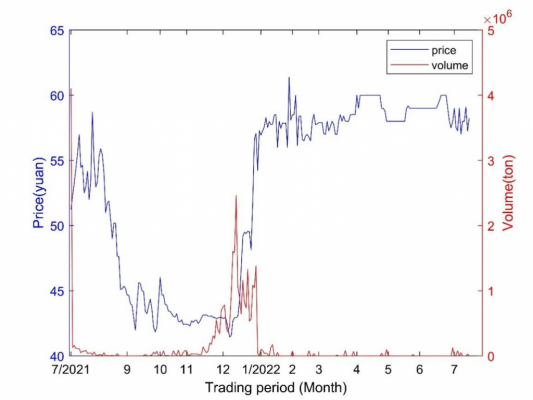
The carbon trading market is an important policy instrument for China to achieve its dual carbon goals. However, at present, China's carbon market is facing serious liquidity shortages, which in turn lead to delayed transmission of carbon price information and dampen the enthusiasm of enterprises to participate in carbon trading. The main reason for the lack of liquidity in China's carbon market lies in the conflict between policy orientation and trading tendencies, specifically the contradiction between policy regulation and the commodity, financial, and monetary attributes of carbon emission allowances. The foundation of carbon market liquidity lies in the scientific design of the primary market and the relative stability of secondary market prices. Existing studies have only focused separately on the interaction mechanisms between the primary or secondary markets and liquidity, and have paid little attention to policy tools for improving liquidity.
Based on a thorough identification of the characteristics and influencing factors of carbon market liquidity in China, this study addresses the issues of weak liquidity, carbon price volatility, and sluggishness in China's carbon market by establishing a "policy-price-liquidity" correlation model. This model is used to predict changes in carbon spot prices resulting from policy adjustments and to describe the specific pathways and effects of policy design in improving carbon market liquidity, thereby expanding the evaluation system for the effectiveness of carbon market policies. At the same time, this study integrates the primary and secondary markets, calculates the profits of carbon emission control entities, and explores the driving patterns of policy on liquidity under market conditions.
The study shows that the impact of policy on carbon market liquidity is mainly reflected in the scale of penalties and the rules for allowance allocation. The newly issued allowances account for 3.3% of the total allocated allowances, and carbon prices increased by approximately 45%. Carbon prices rise with the increase in freely allocated allowances, but then decline rapidly after reaching a peak price of 57 yuan per ton. If free allowances are increased in the short term and market trading volume is expanded in the medium to long term, carbon market liquidity will improve and carbon prices will rise. However, due to the difficulty in measuring the actual demand for allowances in the market, the allocation of free allowances may result in an oversupply, thereby causing a long-term decline in carbon prices. Therefore, an effective way to improve carbon market liquidity in the medium to long term is to increase trader participation and the actual scale of transactions in the carbon market. The research results further indicate that due to the limited impact of the China Certified Emission Reduction (CCER) offset mechanism on the carbon market, using an increase in CCER to adjust market liquidity presents certain challenges.
The study recommends that the government further expand the scale of the carbon market, formulate continuous and controllable carbon trading policies, and increase the cost of holding allowances for enterprises, in order to incentivize their willingness to trade and prevent them from developing pessimistic trading sentiments. In future research, the scale of data should be expanded to further quantify the impact of market risk and enterprise size on carbon market liquidity, thereby enhancing the systematic nature and accuracy of related policies.
Dr. Song Yazhi, a visiting professor in the Ye Bin research group, is the first author of this paper, Assistant Professor Ye Bin is the corresponding author, and Southern University of Science and Technology is the first corresponding institution. This research was supported by the National Natural Science Foundation of China (Grant No. 72173058).
Paper link (copy the link to your browser to access): https://www.sciencedirect.com/science/article/pii/S0140988322005084?dgcid=author