 English
  简体中文
简体中文 Wentao Xin, an undergraduate student (Class of 2023) from the group of Assistant Professor Bin Ye at the School of Environmental Science and Engineering, Southern University of Science and Technology (SUSTech), has published a first-author research paper in the internationally renowned journal Applied Energy, entitled "Aggregator-driven optimization of electric vehicle charging stations in Shenzhen: Synergizing smart charging, renewable energy integration and energy storage". The paper investigates the potential of vehicle-to-grid (V2G) technology in synergistically optimizing smart charging, renewable energy integration, and energy storage, and proposes a forward-looking comprehensive modeling and strategy optimization framework, providing both theoretical and practical guidance for the sustainable development of urban electric vehicle charging infrastructure.
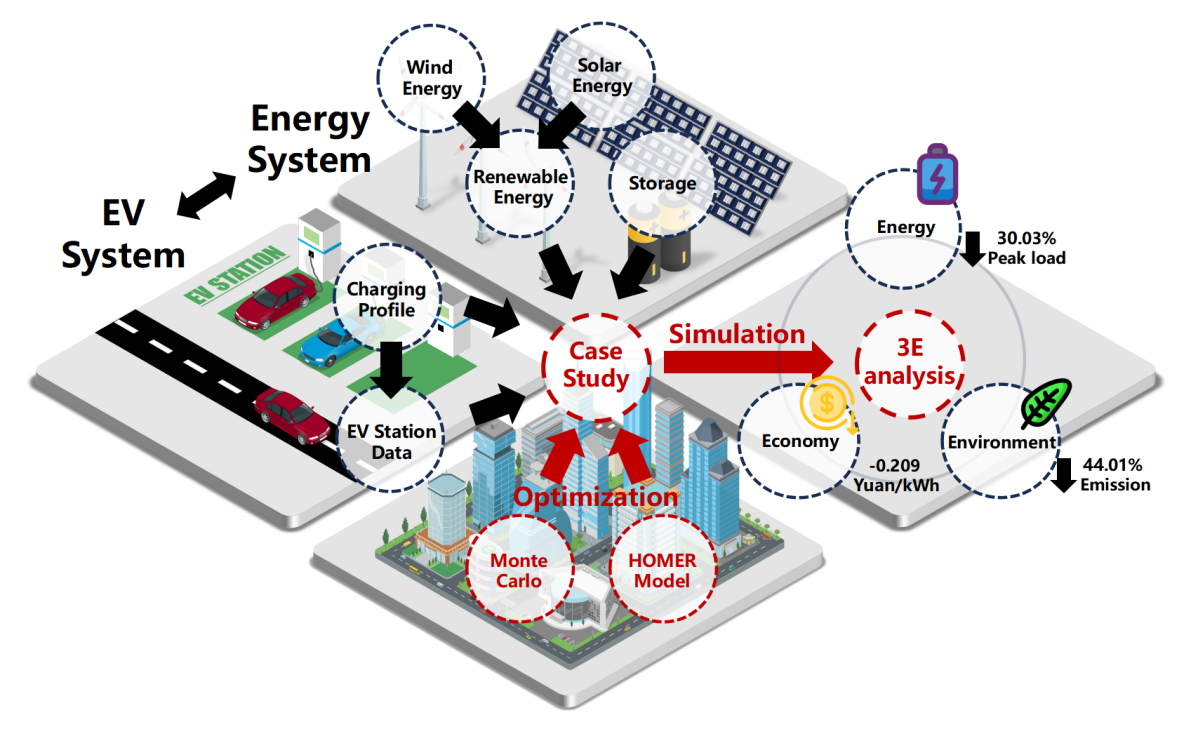
Figure 1 Research Conceptual Diagram
The transportation sector is not only a major source of urban air pollution but also a primary contributor to urban carbon emissions. Accelerating the electrification of transportation is considered an effective way to reduce carbon emissions in the transportation sector. Electric vehicles (EVs) are regarded as an important pathway to achieve transportation electrification and carbon neutrality. With the rapid global growth of EV ownership, particularly in China, the world's largest EV market, the surge in charging load has brought significant pressure on distribution networks, such as increased peak load, decreased grid stability, and increased operation and maintenance costs. Therefore, optimize the operation efficiency of the EV charging system while ensuring grid safety has become an urgent challenge.
To address these challenges, the research team, based on the latest international research progress in the field, proposed an innovative optimization framework for charging infrastructure, combining three key technical modules: (1) a Random Load Forecasting Model (RLFM) based on real data is used to simulate the charging behavior and load changes of electric vehicles at different time periods. (2) a smart charging optimization algorithm based on mathematical programming, designed to dynamically schedule charging time and power under time-of-use electricity price incentives, thereby maximizing economic benefits and reducing grid impact. (3) a microgrid system modeling that comprehensively considers multiple energy pathways such as solar energy, wind energy, energy storage, grid electricity purchase, and buyback, conducts multidimensional simulation and evaluation from supply-demand matching to system economic and environmental performance.
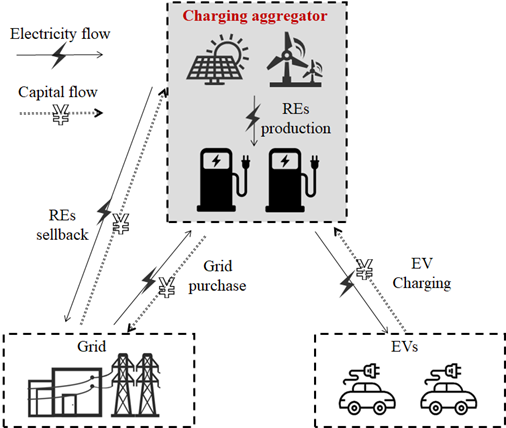
Figure 2 Research Framework Diagram
The study innovatively proposes an urban-level analysis framework integrating behavior simulation, scheduling optimization, and energy system modeling, fully considering the spatiotemporal heterogeneity of EV user charging behavior, the dynamic response characteristics of electricity price mechanisms, and the volatility of renewable energy. Based on large-scale empirical data from 1,682 charging stations with a total of 24,798 charging piles in Shenzhen, the study conducts empirical analysis of the V2G theoretical model, validating its applicability and practical value.
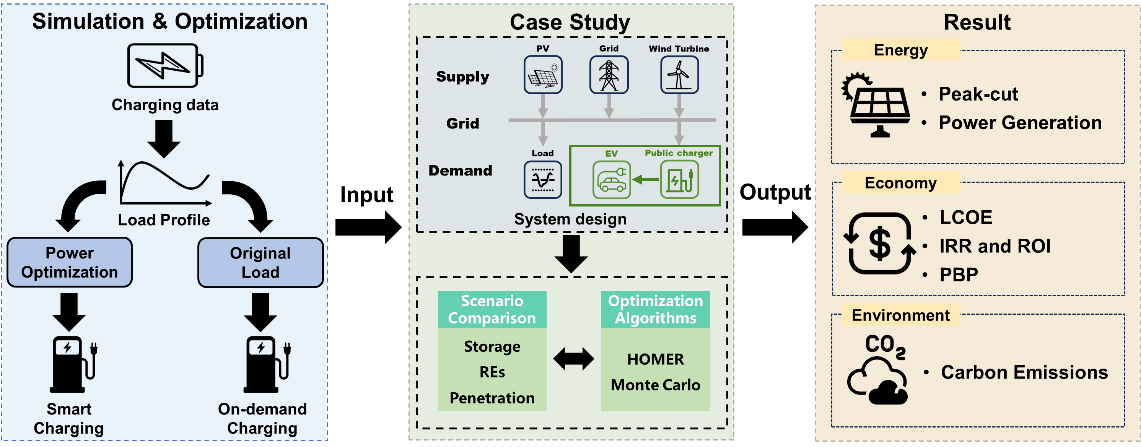
Figure 3 Core Model Framework
The research results show that, under the scenario with renewable energy penetration exceeding 80%, the smart charging strategy can reduce the system's unit energy cost by ¥0.38/kWh and carbon emissions by 44.01%, showing significant improvement compared to traditional immediate charging methods. Meanwhile, the strategy effectively reduces system peak load by 30.03%, helping to alleviate grid operation stress. The introduction of energy storage further enhances the carbon reduction benefits of smart charging, resulting in a further decrease in annual carbon emissions compared with scenarios without storage, demonstrating the synergistic advantage of smart charging and energy storage technologies.
Nevertheless, the results indicate that Shenzhen’s current charging facilities still suffer from low utilization and redundant construction, placing profit pressure on some charging operators. Scenario simulations show that as charging demand grows, the utilization of existing facilities will increase accordingly, and economic benefits will improve significantly. Through the dual means of smart charging and energy storage control, a dynamic balance between facility configuration and user demand can be achieved, enhancing the resilience and flexibility of urban energy systems.
In addition, the study further explores the sensitivity of system revenue to the electricity buyback mechanism, indicating that increasing the buyback price helps improve the economic and environmental performance of the smart charging system. Scenario simulations also analyzed the relationship between charging pile supply and demand and future charging demand growth on profitability, proposing policy recommendations to avoid blind expansion and achieve rational planning. The study emphasizes that multiple factors, including grid load, energy structure, and economic returns, should be comprehensively considered in policy formulation to achieve technology-feasible, economically reasonable, and environmentally sustainable goals.
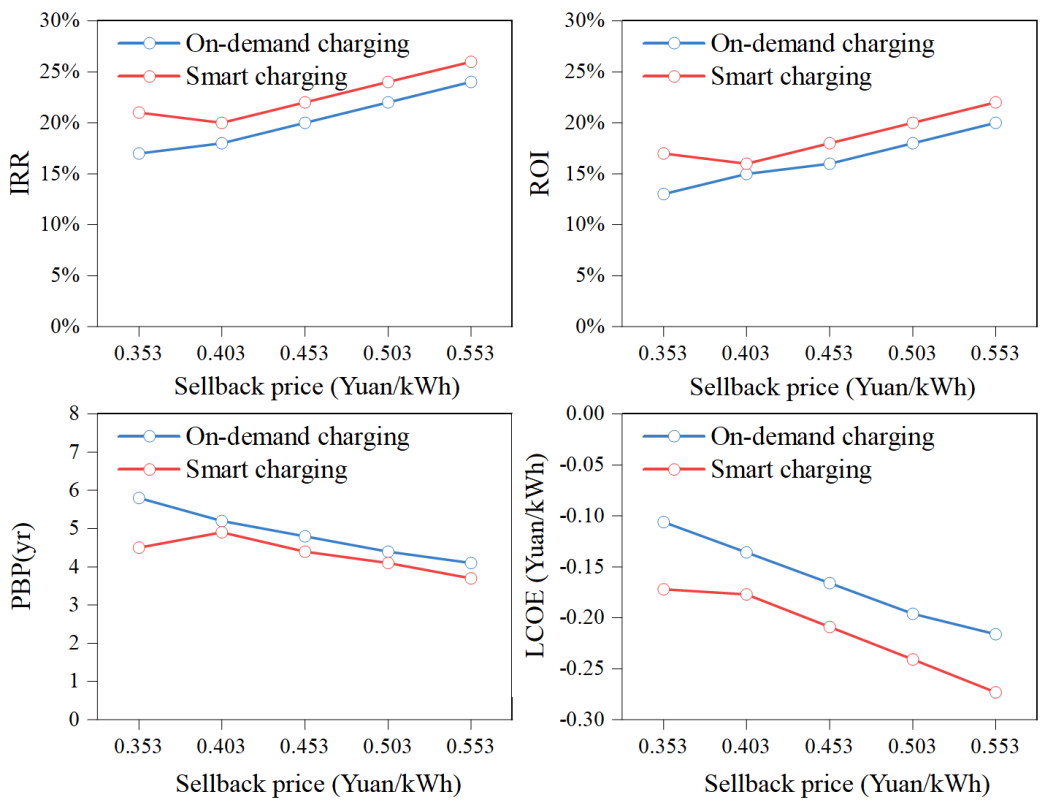
Figure 4 Sensitivity analysis of key parameters
This research not only provides theoretical support and optimization insights for the scientific layout and investment returns of urban charging infrastructure in China, but also offers reference for other cities worldwide facing load management challenges caused by the proliferation of new energy vehicles. The proposed methods for charging load forecasting, microgrid energy flow scheduling, and multidimensional evaluation are highly generalizable and transferable, with potential for cross-regional and cross-scenario application.
Southern University of Science and Technology is the sole affiliation of this paper. Wentao Xin, a third-year undergraduate student from the School of Environmental Science and Engineering, is the first author, and Assistant Professor Bin Ye is the corresponding author. The research was supported by the National Natural Science Foundation of China under grants 72173058 (led by Bin Ye) and 72394391 (participated by Bin Ye).
Paper link: https://www.sciencedirect.com/science/article/pii/S030626192501075X?dgcid=author