 English
  简体中文
简体中文 At the end of April, visiting student Muge Xie from Assistant Professor Bin Ye’s research group at the School of Environmental Science and Engineering, Southern University of Science and Technology, made new progress in the optimization of hybrid renewable energy systems. The results were published in the international energy journal Energy Reports (JCR Q2) in a paper entitled “Technical and economic study of renewable-energy-powered system for a newly constructed city in China”.
Geothermal energy and solar energy are clean alternatives to traditional fossil fuels, characterized by abundant reserves, wide distribution, and environmental friendliness. Therefore, the rational development of geothermal and solar energy is crucial for China’s carbon reduction goals. Xiong’an New Area (XANA), as a key city for green development, places renewable energy development at its core. However, most researchers currently consider only photovoltaic (PV) and wind turbine systems in renewable energy generation design, using traditional batteries, grids, or pumped storage to store electricity. Against this background, this study selects XANA as the research case and introduces vehicle-to-grid (V2G) as a long-term storage model to effectively store geothermal and solar energy, thereby achieving coordinated decarbonization of urban energy and transportation. With global environmental problems becoming increasingly severe and urban construction gradually emphasizing green and eco-friendly goals, this study provides valuable reference for future infrastructure development.
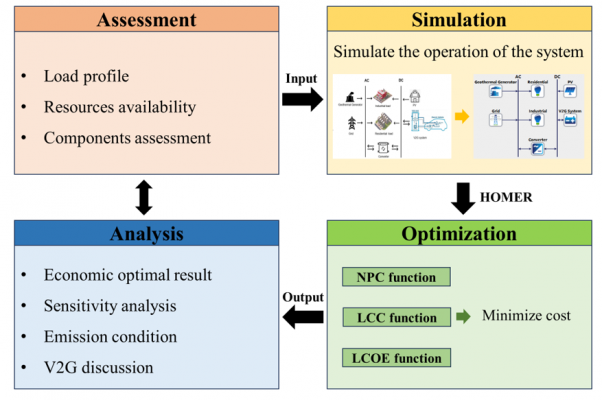
Figure 1 Evaluation - simulation – optimization - analysis research framework for energy systems
The study shows that in most regions where renewable resources are available, hybrid renewable energy systems are more economical than traditional systems that mainly rely on fossil fuels for power generation. Technological development can significantly reduce the construction cost of power generation systems. Considering both economic and environmental factors, the proportion of renewable resources in future power systems will continue to increase. Due to the uncertainty of renewable resource availability, grid connections and energy storage components are essential to ensure the reliability of future power systems, and V2G proves to be a profitable option. XANA can be regarded as an exploration of China’s future green cities. The results demonstrate that hybrid renewable energy systems combined with V2G are not only applicable to new cities in China but also suitable for developed regions with the need to reduce carbon emissions and ensure sustainable growth.
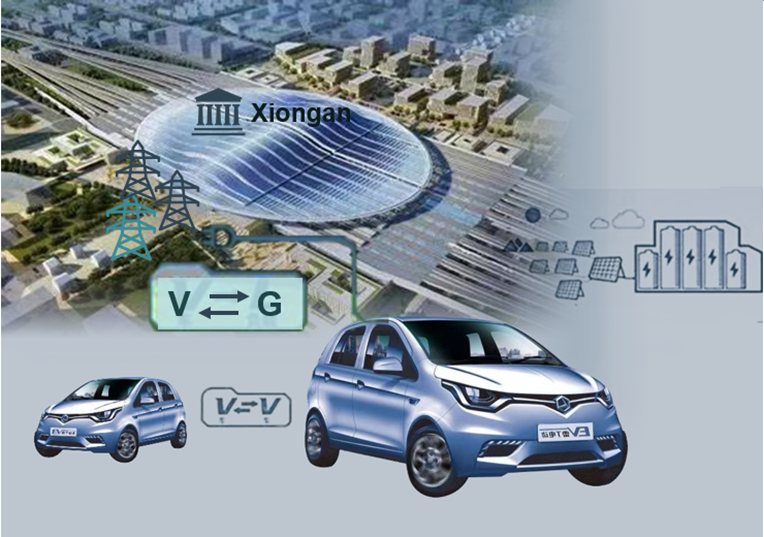
Figure 2 Schematic diagram of V2G system in XANA
Southern University of Science and Technology is the first-completing institution of this paper. Muge Xie, currently a senior undergraduate student at The Chinese University of Hong Kong (Shenzhen), served as a visiting student at Southern University of Science and Technology from February to August 2023. During the visit, she investigated the renewable energy utilization in XANA, Hebei Province, China. Combining her professional background, she developed an evaluation method to assess the impact of geothermal-PV renewable energy systems on carbon reduction and economic parameters in Xiong’an, and proposed both near-term and long-term optimized energy systems for the city. This research was supported by the National Natural Science Foundation of China (72173058), the Natural Science Foundation of Guangdong Province (2022A1515011075), and the Shenzhen Sustainable Development Research Special Fund (KCXST20221021111405012), undertaken by Bin Ye’s research group.