 English
  简体中文
简体中文 Recently, Visiting Assistant Professor Ye Bin from the School of Environmental Science and Engineering at Southern University of Science and Technology published a research paper titled “How do socioeconomic factors influence urban PM2.5 pollution in China? Empirical analysis from the perspective of spatiotemporal disequilibrium” in the important environmental science journal Science of the Total Environment (IF 6.551). The study empirically investigates how socioeconomic factors influence PM2.5 pollution in Chinese cities from the perspective of spatiotemporal disequilibrium.
I.Research Background
Environmental air pollution poses a serious threat to human health, for example, by causing a decline in lung function, increasing the incidence and mortality rates of respiratory and cardiovascular diseases. According to a report by the Asian Development Bank, seven of the world’s ten most polluted cities are located in China, and less than 1% of Chinese cities meet the World Health Organization’s air quality standards. The high-energy-consumption-driven rapid economic growth model and the low eco-efficiency urbanization process are the main causes of smog accumulation. China has 293 prefecture-level cities, which, located in different geographical locations, have different natural conditions, income levels, energy consumption, and environmental standards, and regional development is extremely unbalanced. From a practical point of view, the purpose of this study is to explore how economic and social factors have driven the rapid growth of PM2.5 pollution in China in recent years and how to understand the heterogeneous impacts among cities.
II.Research Content
This study quantitatively identifies the spatiotemporal heterogeneous impact of different socioeconomic factors on urban PM2.5 pollution in 273 Chinese cities from 2010 to 2016 through exploratory spatial data analysis (ESDA) and the geographically weighted regression (GWR) model, which considers spatial non-stationarity. Arcgis software is used to visualize the variation of these factors over time and space. The spatiotemporal distribution pattern and potential driving mechanisms of smog pollution are systematically analyzed. The results help environmental managers better understand the complex relationship between socioeconomic development and urban pollution.
III. Research Results
The results show that: (1) Cities with severe PM2.5 pollution are mainly located north of the Yangtze River and east of the Hu Line. There is a significant positive correlation among most Chinese cities, with nearly one-third of the cities located in high-high pollution clusters. These high-pollution clusters are mainly concentrated in the North China Plain and the middle and lower reaches of the Yangtze River Plain, where the Yangtze River Delta, Beijing-Tianjin-Hebei urban agglomerations, and adjacent provincial cities between these two urban agglomerations have serious pollution. (2) From the perspective of global regression, population size and economic development are the main factors causing the deterioration and spread of PM2.5 pollution in Chinese cities, with population size being the most significant driving factor. Industrial structure, economic development, degree of opening up, urbanization level, and road intensity have a weaker promoting effect on urban PM2.5 pollution, while the number of buses and technological development can moderately mitigate urban PM2.5 pollution. (3) The socioeconomic factors influencing urban pollution show obvious spatial heterogeneity. Specifically, cities where economic development promotes pollution are mainly concentrated in the Northeast and the West, while cities where economic development mitigates pollution are concentrated in the Southeast. Except for a few cities (such as those in Guangxi, Hunan, and Hainan provinces), population size has a positive driving effect on pollution in most cities. The number of buses can mitigate pollution in most cities, with the impact spreading gradually from the Southwest to the Jiangnan region. The effect of technological progress on pollution mitigation has strengthened over time, with cities north of the Yangtze River showing a significant mitigation effect (see Figure 1).
Based on the results, this study offers some policy insights for mitigating urban pollution: First, strengthen joint prevention and control among regions to alleviate the spatial dependence of pollution. Second, optimize high-level design to control the compatibility of industrial agglomeration and population size. Third, continuously develop new technologies to improve industrial production efficiency and encourage green travel.
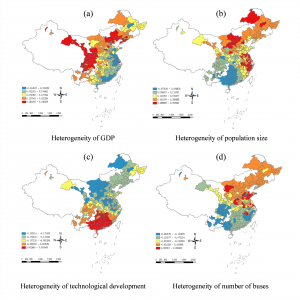
Figure 1: Spatial Distribution of Local Regression Coefficients of Socioeconomic Factors (2016)
The first author of this paper is Dr. Yan Dan, a postdoctoral fellow at Tsinghua Shenzhen International Graduate School and a visiting scholar at Southern University of Science and Technology. Assistant Professor Ye Bin from the School of Environmental Science and Engineering at Southern University of Science and Technology is the sole corresponding author.
This project was supported by the National Natural Science Foundation of China (71803074), the Shenzhen Natural Science Foundation General Program (JCYJ20190806144415100 and JCYJ20190809162809440), and the Special Fund for the Construction of High-Level Universities at Southern University of Science and Technology (No. G02296302, G02296402).
Ye Bin is the Party Branch Secretary of the Faculty and Staff at the School of Environment and an Assistant Professor at Southern University of Science and Technology. Since joining the university two and a half years ago, he has published 12 high-impact papers in top journals of environment and sustainability, including Renewable and Sustainable Energy Reviews (IF 12.110), Applied Energy (IF 8.848), and Resources, Conservation & Recycling (IF 8.086). He has published more than 60 research papers in total and has presided over national, provincial, and municipal natural science funds as well as the China Postdoctoral Science Fund.